
Tech Term: What are All These “-Wares?”
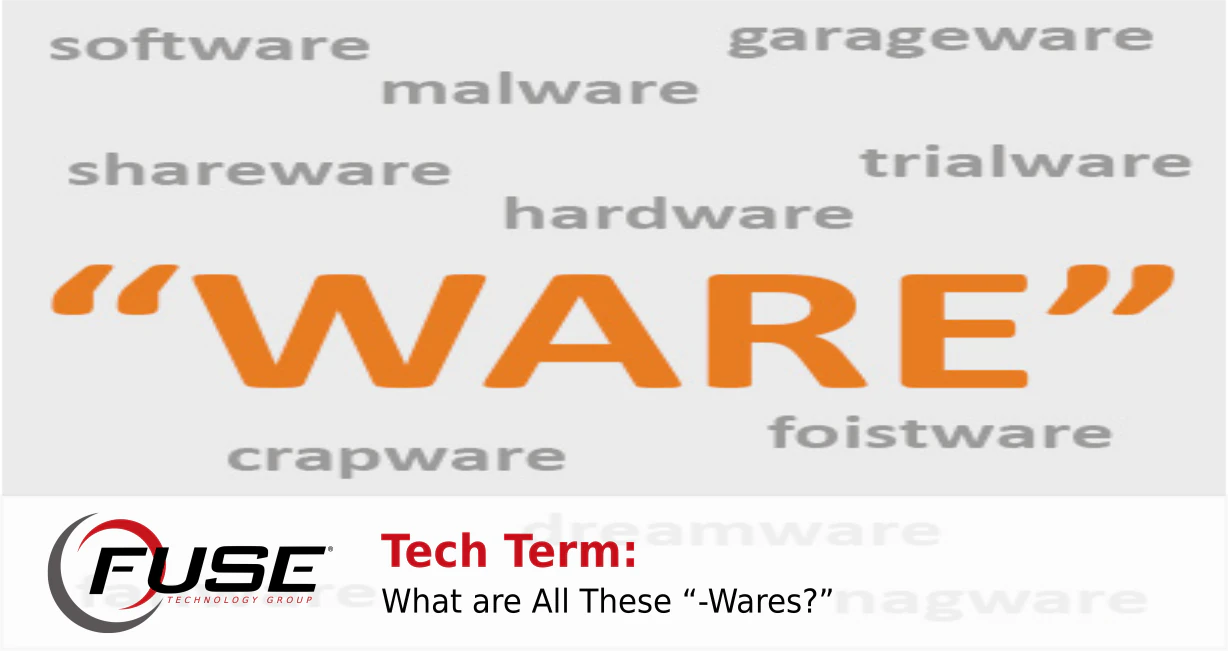
Talk about computers for long and you’ll hear a lot of words ending in “-ware.” You can probably name a few yourself. But why is everything “something-ware”?
Here’s where the word comes from, and a few lesser-known kinds of software worth knowing, especially the ones Michigan businesses should keep off their computers.
Why “-ware”?
It started with hardware.
The physical parts of a computer were already called hardware, so the programs that run on it became software.
“Ware” means a product.
Merriam-Webster defines “ware” as “manufactured articles, products of art or craft,” and also as “an intangible item (such as a service or ability) that is a marketable commodity.” Put together, software is a made product that provides a service. After all, a program is a set of code built to do a specific job for a specific audience.
Lesser-known “-wares”
Dreamware.
Software that hasn’t started development and may never be built: it’s still in the “what if there was software that…” phase.
Trialware and nagware.
Trialware is available for a limited time, then only in a restricted form, if at all: a free sample. Nagware is trialware that interrupts you with constant reminders to register, sometimes disabling features or showing pop-ups until you buy.
Bloatware.
The programs that come pre-installed on a new computer that you have no interest in or need for. They take up space without offering much.
Foistware.
Software that gets bundled with legitimate programs and installed without the user knowing. Malware often arrives this way.
Fanware and garageware.
Fanware is written by hobbyist coders to promote an interest they share. Garageware is an unkind name for software that’s full of mistakes, as if it was built by amateurs in a garage.
What to watch for at work
- Remove bloatware from new computers before they go into use.
- Watch installers closely. Untick bundled extras so foistware doesn’t sneak in.
- Track trials. Know which programs will expire or start nagging, and decide before they do.
The bottom line
A clean, well-managed set of software makes computers faster and safer. If you’d like help keeping your company’s computers that way, our Michigan team is here. Talk to our team: 248‑545‑0800.
From the Fuse archive, first published November 28, 2018. Read the latest on the Fuse blog.
