
Social Engineering and Your Business
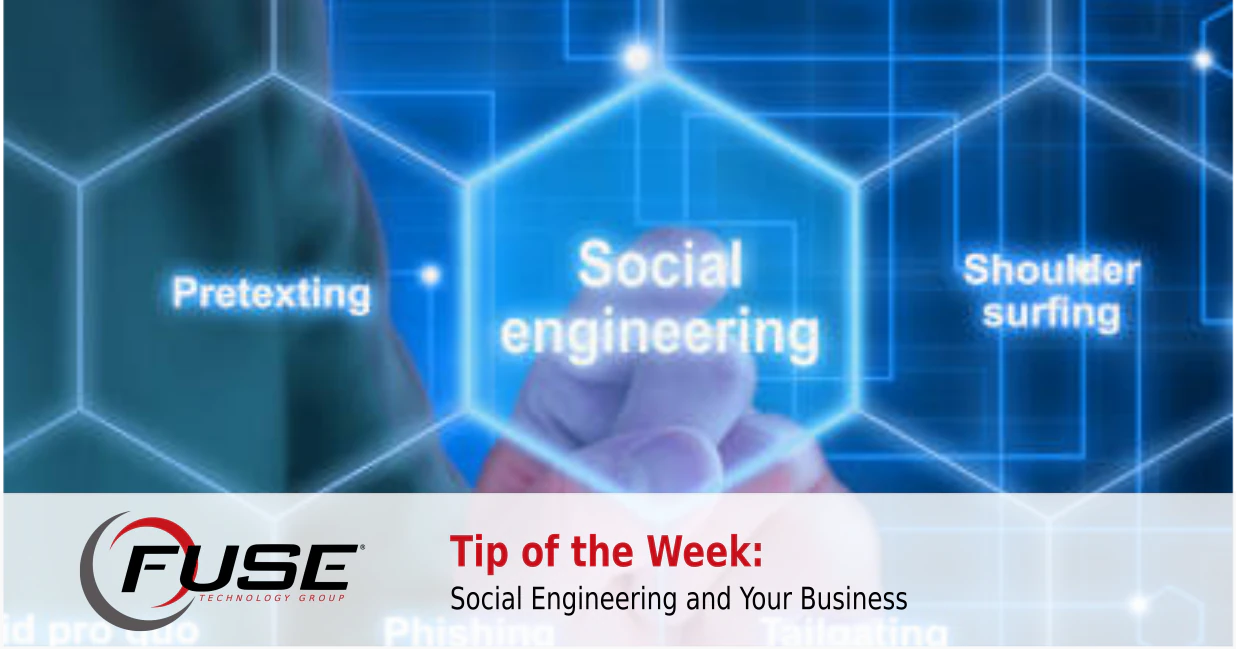
Many people focus on technical threats and overlook a major one: social engineering. It’s just another way for criminals to get what they want, so it needs protecting against too.
What is social engineering?
Social engineering is manipulating people into giving criminals access they aren’t supposed to have. The social engineer uses influence, real or fake, to trick people into handing over the information they need.
It can be approached in several ways: taking advantage of carelessness, posing as someone who needs help, exploiting people’s comfort zone, or using fear.
Carelessness
Businesses put tools in place to protect the network, but they still rely on each person to look after their own workstation and devices. If people don’t, scammers can get in fairly easily.
If spam or phishing doesn’t work, a scammer may try to get into your workspace. If your people skip best practices for convenience and leave credentials or correspondence in the open, a scammer can often turn that into access.
Helpfulness
Most people want to help someone who’s having trouble, and attackers take advantage of that. Someone might hold the door for a thief and let them into your office. Attackers can also use information gathered online to win a person’s trust. Your staff need to make sure someone really needs help, and isn’t trying to get at company resources.
The comfort zone
People doing repetitive tasks can grow complacent, and social engineers take advantage of it, especially at larger companies. If employees are used to unfamiliar people walking around, nobody pays attention to a scammer in the office.
Forget the image of a lone hacker in a dark room. The attackers worth worrying about know your company’s weakest points and go after them. If that weak point is complacency, that’s how they’ll come in.
Fear
Fear is a powerful motivator. Most fear tactics today arrive as phishing messages by email, instant message or text, with a believable story designed to make someone react on impulse.
Your checklist
- Keep credentials out of sight. Clear desks, locked screens.
- Verify before helping. Especially with access requests.
- Question strangers. Politely, every time.
- Pause on urgent messages. Check before you act.
The bottom line
Social engineering targets people, not just systems. If you’d like to learn more about it or any other security issue, our Michigan team is here. Talk to our team: 248‑545‑0800.
From the Fuse archive, first published February 18, 2020. Read the latest on the Fuse blog.
