
Fishing for Answers to Keep Phishing Attacks from Sinking Your Business
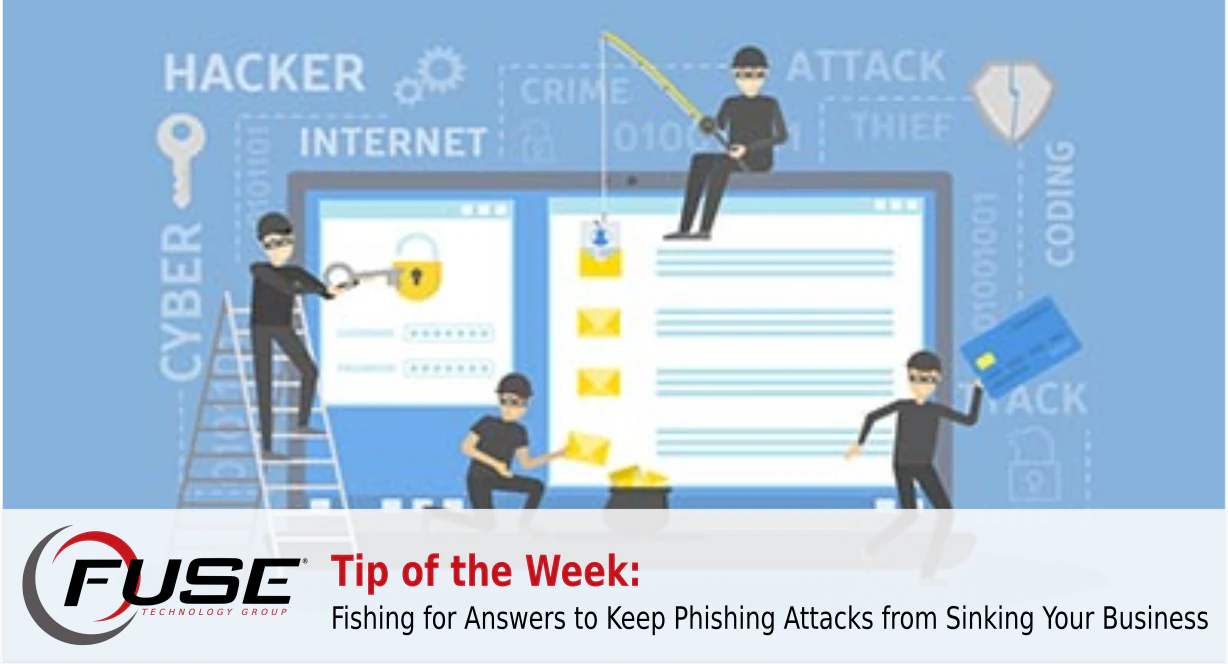
Phishing has been in the news for years, for good reason: it’s one of the main ways attackers get into secured networks and data. Awareness hasn’t stopped it. Phishing emails go out in enormous numbers, and it only takes one that works.
Here are three common forms of phishing, and what Michigan businesses should teach their staff about each.
Deceptive phishing
A fake that looks real.
The most common type. An email or message pretends to be a legitimate company or person to steal sign-in details. With real credentials, the attacker doesn’t set off alarms right away, and has time to pick what to take.
What to teach your team.
Many phishing emails have misspellings or sloppy construction, and many push you to open an attachment or click a link. Hover over links to check where they really go before clicking. Be very wary of any email demanding payment, especially one that claims to come from a bank.
Spear phishing
Personal, so it’s more convincing.
Spear phishing is aimed at one specific person. It may include their name, title, company and even work phone number, which makes people drop their guard. The goal is the same: get them to click a malicious link or attachment.
Watch what you share.
Professional networking sites like LinkedIn give attackers plenty of material. You don’t need to stop using them, but be careful what you share, and confirm that any personalized email is genuine before you click.
Pharming
Sending you to the wrong site.
Instead of tricking you with an email, pharming targets DNS, the system that matches website names to addresses, so people get redirected to a malicious copy of a real site.
What to teach your team.
Make sure staff enter credentials only on sites they’ve checked. A “https” address and lock icon mean the connection is encrypted, not that the site is genuine, so check the address itself too. Strong, continuously patched antivirus on every machine also helps.
Keeping phishing from sinking your business
- Train regularly. Show staff real examples of each type.
- Check before clicking. Hover over links and confirm the sender’s actual address.
- Back training with tools. Email filtering, patched antivirus and endpoint security.
The bottom line
With good training and solid security tools, your business can avoid most of the phishing that comes its way. If you’d like help choosing the right tools and training for your team, our Michigan team is here. Talk to our team: 248‑545‑0800.
From the Fuse archive, first published March 18, 2019. Read the latest on the Fuse blog.
