
Don’t Migrate to the Cloud Unless You Consider This
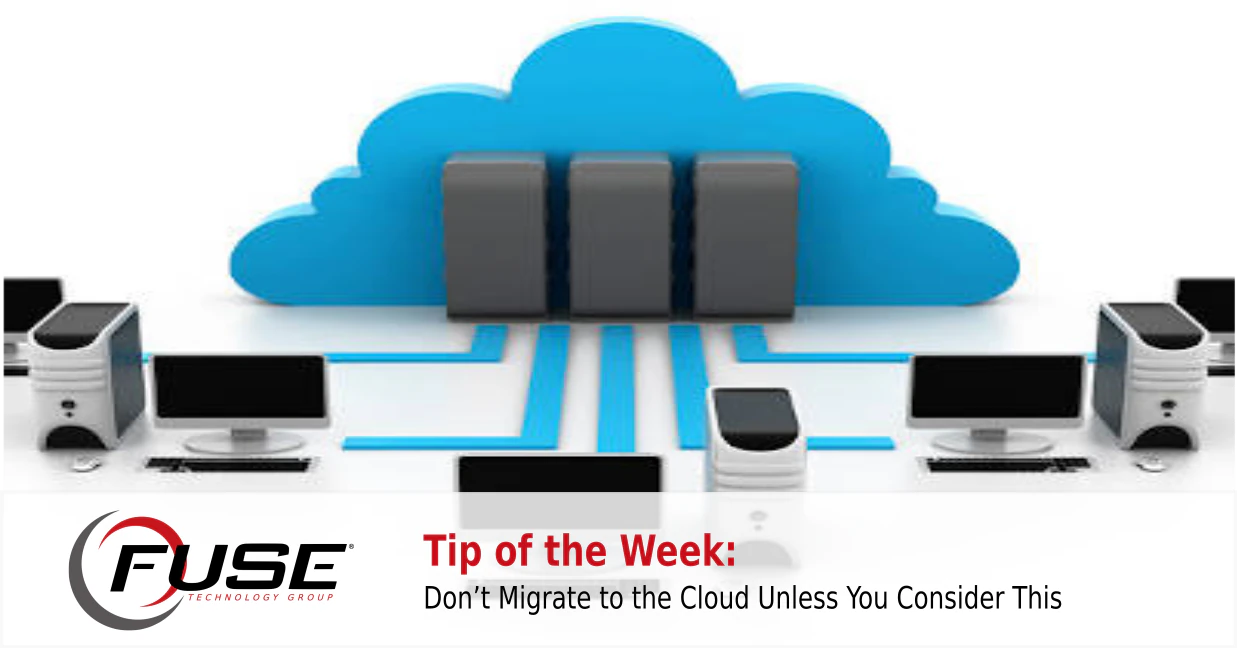
You hear a lot about the benefits of moving your business to the cloud. It can reduce big spending on new infrastructure and ongoing management costs, stretch your IT budget further, add functionality and make users happier.
Businesses are moving all or part of their IT to the cloud for good reasons. Before you do, keep the following in mind.
The cloud is someone else’s computer
Depending on how you look at it, this is a pro or a con. When you host data in the cloud, you’re trusting someone else to manage it. That can mean your data is in better hands: a professional data center with strong security, climate control, high uptime and trained staff managing the hardware, software and network is usually a big step up from what most small businesses can manage on their own.
That said, anyone can sell cloud storage. Anyone can lease part of a data center, or keep a shared server on their own premises and sell you computing resources from it.
Before you commit, understand your service level agreement (SLA), how emergencies are handled, and whether you’re getting the computing resources you need.
Cloud migrations can be disruptive
Moving to the cloud can be fairly simple, or it can take a lot of time and labor. Don’t be fooled by a low monthly price: there’s usually work involved in moving the data, configuring the environment, training users and making adjustments.
You won’t lose access to your data during the move, but the transition takes time, and any time people have to change their everyday processes, things can slow down.
Done right, it’s worth it
Most businesses can benefit from at least some cloud computing, from basics like hosted email and document management (such as Google Workspace or Microsoft 365), to data backups, to a line-of-business app, all the way to moving most of your infrastructure to a hosted environment.
The trouble usually starts when a cloud project isn’t planned properly or is handled poorly.
Your checklist
- Vet the provider. Who runs the data center, and how?
- Read the SLA closely. Uptime, emergencies, resources.
- Budget for the move. Not just the monthly fee.
- Plan training. So daily work keeps moving.
The bottom line
A well-planned cloud move is worth it. A rushed one can cost more than it saves. If you’d like to talk through your options, our Michigan team is here. Talk to our team: 248‑545‑0800.
From the Fuse archive, first published January 31, 2020. Read the latest on the Fuse blog.
